
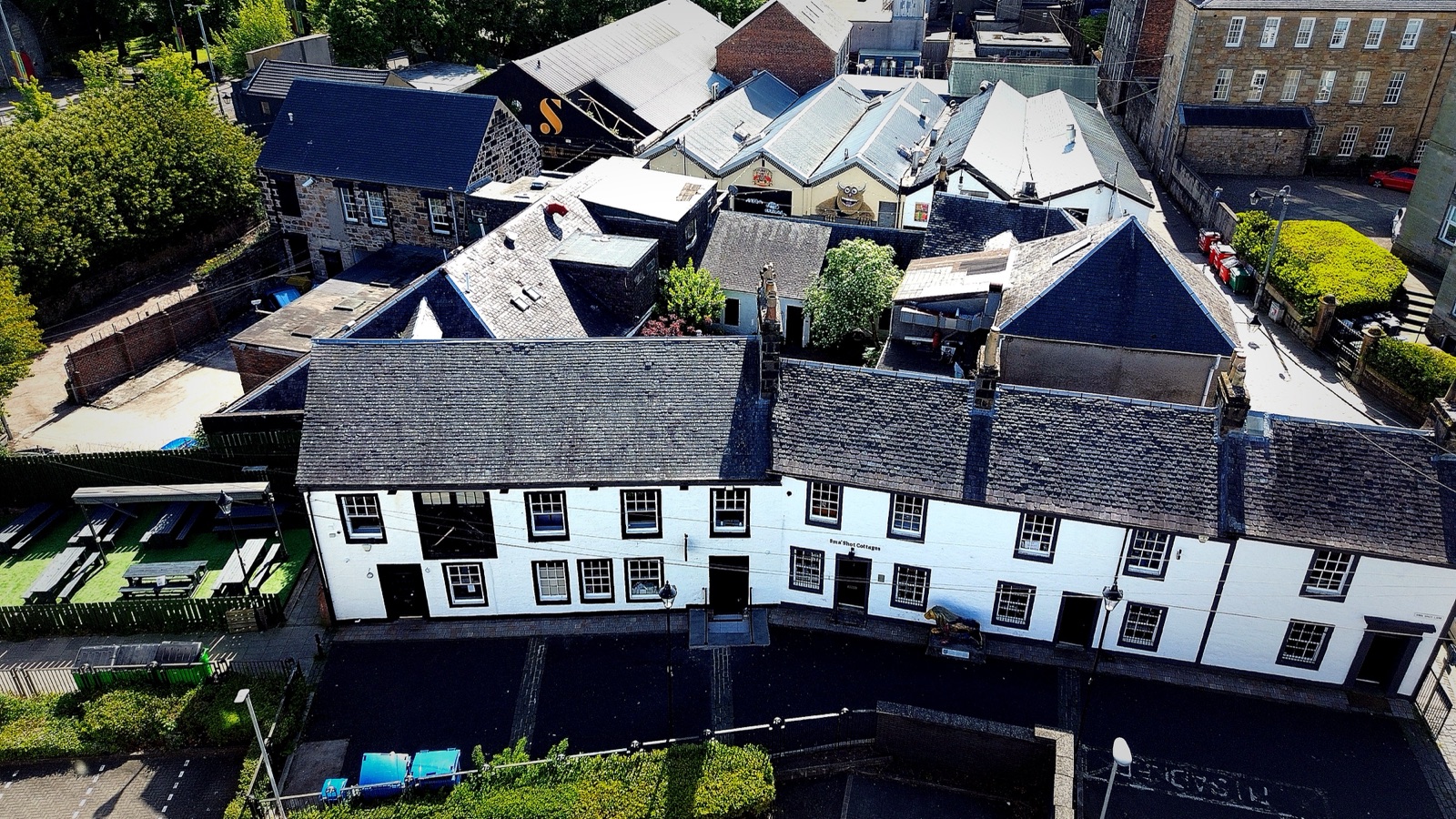
Paisley heritage and history can fill an entire day without requiring a rigid itinerary. The town centre brings together medieval roots, grand civic architecture, surviving mill buildings, weaving stories and contemporary murals within a relatively compact area.
The best way to explore is to connect these layers rather than treat each landmark as an isolated stop. Begin with the Abbey and River Cart, follow the town’s industrial development through its sandstone buildings, then use public art and cultural venues to bring the story into the present.
This guide is designed as a flexible local plan. Building access, events and exhibitions can change, so check individual venues before travelling if you want to go inside.
Begin at Paisley Abbey and the River Cart
Paisley Abbey is the natural starting point. Its origins reach back to the 12th century, and the building provides an immediate link to the medieval religious community around which the town developed. Take time to walk around the exterior as well as viewing the main frontage: changing angles reveal the scale of the stonework and its relationship with the surrounding streets.
The nearby River Cart is equally important to understanding the town. It is easy to think of the river as a background feature, but waterways supported transport, trade and industrial growth. A short walk beside the Cart also gives useful views towards some of Paisley’s larger buildings.
From the Abbey area, include Paisley Town Hall in your route. The Abbey, river and Town Hall form a strong opening sequence because they show three different parts of the local story: faith, geography and civic ambition.
Read Paisley’s industrial story in its buildings
Paisley’s international reputation was shaped by weaving, thread production and skilled textile workers. That history is still visible, even where buildings now have different uses.
Anchor Mill is one of the clearest landmarks from the town’s industrial era. A guide-style visit can focus on its exterior, scale and position near the river. Look at the number of windows and the long elevations, then compare them with the smaller buildings around the town centre. The contrast helps explain how dramatically industrial production changed Paisley.
Continue towards the High Street and Oakshaw area, looking for carved stone, decorative doorways, former commercial premises and rooflines. Thomas Coats Memorial provides another major architectural marker, while the former Coats Observatory and surrounding institutional buildings reflect the importance once placed on learning, science and public improvement.
Do not rush this section. Small details often make a heritage walk memorable: old inscriptions, blocked doorways, warehouse proportions and street names can all reveal how an area was used.
Add the Paisley Mural Trail
Heritage does not stop with historic stone. Paisley’s murals connect local identity with living artists, popular culture and community memory.
The official Paisley Mural Trail lists 52 painted works across the town centre. Subjects include mill workers, motorsport, music, performance and everyday life, making the trail a useful bridge between industrial history and modern Paisley.
Rather than attempting every mural in one outing, select a cluster that fits your route. Works featuring the mill girl Ellen Farmer, rally driver Colin McRae and performing arts figure Elma Whyte demonstrate the variety of stories represented. Other murals reward slower observation through details connected to childhood, wellbeing and local streets.
The trail works particularly well for mixed-age groups because it adds colour and a simple spotting activity to a walk dominated by architecture. It is also easy to divide into several shorter visits.
Make time for cultural stops
A heritage day does not need to consist entirely of outdoor interpretation. Paisley Central Library on the High Street can be useful for local reading, research and a quiet break. Check current library information if you need a particular collection or service.
Paisley Arts Centre is another potential stop when its programme matches your visit. Performances, workshops and community events can place local culture in a contemporary setting, while the building itself adds another layer to the town’s architectural story.
Keep an eye on programmes from local venues, community groups and heritage organisations. Talks, guided walks and temporary displays often provide a more detailed route into subjects such as weaving, architecture, migration or family history.
A simple Paisley heritage walking route
For a manageable town-centre circuit, try this order:
1. Start at Paisley Abbey and walk around the exterior.
2. View Paisley Town Hall and the River Cart.
3. Follow the river towards Anchor Mill for the industrial landscape.
4. Return towards the High Street, adding nearby murals as you go.
5. Continue uphill into Oakshaw for churches, civic buildings and wider town views.
6. Finish on the High Street with the library, a cultural event or another section of the mural trail.
Allow extra time for steep streets around Oakshaw, photography and indoor stops. Anyone with limited mobility may prefer to split the route into the flatter Abbey and river section, followed by a separate High Street visit.
Extend the story across Renfrewshire
Paisley makes a strong centre, but the wider Renfrewshire area adds different perspectives.
Renfrew’s historic town centre and Town Hall connect with the burgh’s long relationship to the Clyde. Erskine and Bishopton offer opportunities to consider how riverside landscapes, estates, transport and modern development have reshaped the area west of Paisley.
Johnstone grew through industry and still rewards a walk that looks beyond modern shopfronts to the town’s street pattern and surviving older buildings. Linwood provides a different 20th-century story, strongly associated with manufacturing, changing employment and large-scale housing development.
Houston and Bridge of Weir are useful for slower village walks. Their older centres, traditional buildings and links with the River Gryffe provide a contrast to Paisley’s dense industrial and civic landscape. Together, these places show that Renfrewshire heritage is not one single story: it includes abbeys, mills, planned growth, manufacturing communities, rivers and village life.
Practical tips for planning your day
Wear footwear suitable for pavements, slopes and riverside sections. Paisley’s centre is compact, but repeated detours for murals and architectural details can add distance.
Check public transport before setting out, especially if combining Paisley with Renfrew, Johnstone, Linwood, Erskine, Bishopton, Houston or Bridge of Weir. Confirm access directly with any building you particularly want to enter, as arrangements may differ from outdoor viewing.
A phone camera is useful, but a small notebook can make the walk more engaging. Record dates, symbols, names and questions as you go. Paisley heritage and history becomes easier to remember when each building is connected to a person, trade or local story.
FAQ
Can I explore Paisley’s heritage without joining a tour?
Yes. The Abbey, River Cart, civic buildings, mill architecture and murals can be connected on a self-guided walk. Check official information separately if you want indoor access.
Is the route suitable for children?
The mural trail, river views and building-spotting activities can work well for families. Choose a shorter circuit and take care near roads and the river.
Where should I go after exploring Paisley?
Renfrew is a good choice for Clyde and burgh history, while Johnstone and Linwood add industrial stories. Bridge of Weir, Houston, Bishopton and Erskine offer village, transport and riverside perspectives.